243 Ballistics (55-100 Grain & 50,100,200+ Yards)
The .243 Winchester is a popular rifle cartridge known for its relatively high velocity, manageable recoil and wide selection of bullet weights. Its ballistic performance varies with bullet construction, muzzle velocity, ballistic coefficient, barrel length and shooting conditions.
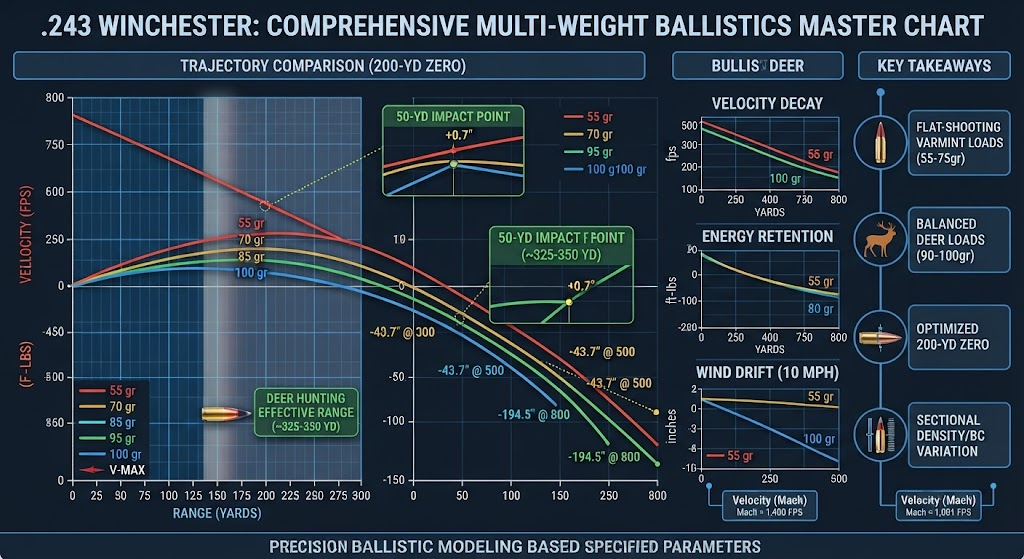
This .243 ballistics guide compares 55, 58, 70, 75, 80, 85, 90, 95 and 100-grain bullets across distances from 50 to 800 yards. The comprehensive table includes velocity, kinetic energy, trajectory and estimated wind drift, using a 200-yard zero as the reference.
The article also covers .243 ballistics with a 100-grain bullet, a 200-yard zero and the bullet’s trajectory at 50 yards.
Table of Contents [Click to minimize]
.243 Winchester Ballistics Chart
The following master chart uses the supplied reference figures for nine bullet weights. The assumed sight height is 1.50 inches above the bore, with standard sea-level atmospheric conditions.
Important: These are supplied reference estimates, not verified manufacturer data. Actual results can differ, and the trajectory and wind-drift values should be independently checked before being treated as a reliable ballistic solution.
| Bullet Weight | Range (Yards) | Velocity (FPS) | Energy (ft-lbs) | Trajectory (Inches) | Wind Drift at 10 MPH (Inches) |
|---|---|---|---|---|---|
| 55 gr | 50 | 3,638 | 1,616 | +0.4 | 0.2 |
| 55 gr | 100 | 3,383 | 1,397 | +1.2 | 0.7 |
| 55 gr | 200 | 2,912 | 1,036 | 0.0 | 3.3 |
| 55 gr | 300 | 2,488 | 756 | -5.2 | 8.2 |
| 55 gr | 400 | 2,100 | 538 | -16.8 | 16.0 |
| 55 gr | 500 | 1,748 | 373 | -37.2 | 27.6 |
| 55 gr | 600 | 1,438 | 252 | -70.4 | 43.8 |
| 55 gr | 700 | 1,186 | 172 | -122.2 | 65.6 |
| 55 gr | 800 | 1,021 | 127 | -199.1 | 93.6 |
| 58 gr | 50 | 3,593 | 1,661 | +0.4 | 0.2 |
| 58 gr | 100 | 3,353 | 1,446 | +1.3 | 0.7 |
| 58 gr | 200 | 2,906 | 1,087 | 0.0 | 3.1 |
| 58 gr | 300 | 2,497 | 802 | -5.1 | 7.7 |
| 58 gr | 400 | 2,120 | 578 | -16.3 | 15.0 |
| 58 gr | 500 | 1,777 | 407 | -35.8 | 25.8 |
| 58 gr | 600 | 1,470 | 279 | -67.2 | 40.8 |
| 58 gr | 700 | 1,208 | 188 | -115.8 | 60.8 |
| 58 gr | 800 | 1,038 | 139 | -187.5 | 86.4 |
| 70 gr | 50 | 3,256 | 1,647 | +0.5 | 0.2 |
| 70 gr | 100 | 3,071 | 1,465 | +1.4 | 0.6 |
| 70 gr | 200 | 2,721 | 1,151 | 0.0 | 2.6 |
| 70 gr | 300 | 2,393 | 890 | -5.7 | 6.2 |
| 70 gr | 400 | 2,086 | 676 | -17.7 | 11.8 |
| 70 gr | 500 | 1,800 | 503 | -37.8 | 19.8 |
| 70 gr | 600 | 1,539 | 368 | -69.6 | 30.6 |
| 70 gr | 700 | 1,310 | 267 | -116.0 | 45.0 |
| 70 gr | 800 | 1,123 | 196 | -182.2 | 63.6 |
| 75 gr | 50 | 3,219 | 1,725 | +0.5 | 0.2 |
| 75 gr | 100 | 3,044 | 1,543 | +1.4 | 0.6 |
| 75 gr | 200 | 2,713 | 1,225 | 0.0 | 2.5 |
| 75 gr | 300 | 2,402 | 961 | -5.7 | 5.8 |
| 75 gr | 400 | 2,107 | 739 | -17.5 | 11.0 |
| 75 gr | 500 | 1,831 | 558 | -37.0 | 18.2 |
| 75 gr | 600 | 1,576 | 414 | -67.5 | 28.0 |
| 75 gr | 700 | 1,350 | 303 | -111.4 | 41.0 |
| 75 gr | 800 | 1,158 | 223 | -173.3 | 57.6 |
| 80 gr | 50 | 3,172 | 1,787 | +0.5 | 0.2 |
| 80 gr | 100 | 2,999 | 1,598 | +1.5 | 0.6 |
| 80 gr | 200 | 2,670 | 1,266 | 0.0 | 2.5 |
| 80 gr | 300 | 2,360 | 989 | -5.9 | 5.9 |
| 80 gr | 400 | 2,067 | 758 | -18.0 | 11.2 |
| 80 gr | 500 | 1,792 | 570 | -38.2 | 18.5 |
| 80 gr | 600 | 1,539 | 421 | -69.9 | 28.6 |
| 80 gr | 700 | 1,316 | 308 | -115.6 | 42.0 |
| 80 gr | 800 | 1,130 | 227 | -180.2 | 59.0 |
| 85 gr | 50 | 3,141 | 1,863 | +0.5 | 0.2 |
| 85 gr | 100 | 2,987 | 1,684 | +1.5 | 0.5 |
| 85 gr | 200 | 2,692 | 1,368 | 0.0 | 2.1 |
| 85 gr | 300 | 2,414 | 1,100 | -5.7 | 5.0 |
| 85 gr | 400 | 2,152 | 873 | -17.0 | 9.3 |
| 85 gr | 500 | 1,905 | 685 | -35.4 | 15.2 |
| 85 gr | 600 | 1,673 | 528 | -63.7 | 23.1 |
| 85 gr | 700 | 1,458 | 401 | -103.6 | 33.4 |
| 85 gr | 800 | 1,266 | 302 | -159.2 | 46.5 |
| 90 gr | 50 | 3,006 | 1,806 | +0.6 | 0.2 |
| 90 gr | 100 | 2,866 | 1,642 | +1.7 | 0.5 |
| 90 gr | 200 | 2,594 | 1,345 | 0.0 | 2.0 |
| 90 gr | 300 | 2,335 | 1,090 | -6.1 | 4.7 |
| 90 gr | 400 | 2,088 | 871 | -18.2 | 8.8 |
| 90 gr | 500 | 1,855 | 688 | -37.7 | 14.3 |
| 90 gr | 600 | 1,637 | 535 | -67.5 | 21.6 |
| 90 gr | 700 | 1,436 | 412 | -109.3 | 31.0 |
| 90 gr | 800 | 1,257 | 316 | -166.8 | 43.1 |
| 95 gr | 50 | 2,961 | 1,847 | +0.6 | 0.2 |
| 95 gr | 100 | 2,826 | 1,683 | +1.7 | 0.5 |
| 95 gr | 200 | 2,564 | 1,387 | 0.0 | 2.0 |
| 95 gr | 300 | 2,312 | 1,127 | -6.3 | 4.6 |
| 95 gr | 400 | 2,072 | 906 | -18.6 | 8.6 |
| 95 gr | 500 | 1,844 | 718 | -38.4 | 14.0 |
| 95 gr | 600 | 1,630 | 561 | -68.7 | 21.1 |
| 95 gr | 700 | 1,432 | 433 | -110.9 | 30.2 |
| 95 gr | 800 | 1,255 | 332 | -168.9 | 42.0 |
| 100 gr | 50 | 2,823 | 1,769 | +0.7 | 0.2 |
| 100 gr | 100 | 2,691 | 1,608 | +1.9 | 0.6 |
| 100 gr | 200 | 2,437 | 1,319 | 0.0 | 2.2 |
| 100 gr | 300 | 2,194 | 1,068 | -7.2 | 5.2 |
| 100 gr | 400 | 1,962 | 855 | -21.1 | 9.8 |
| 100 gr | 500 | 1,743 | 674 | -43.7 | 16.0 |
| 100 gr | 600 | 1,538 | 525 | -78.4 | 24.1 |
| 100 gr | 700 | 1,350 | 405 | -127.2 | 34.6 |
| 100 gr | 800 | 1,182 | 310 | -194.5 | 47.9 |
Trajectory is measured in inches relative to the supplied reference line. Positive values indicate above the line of sight, while negative values indicate below it. The table uses the supplied values, which require independent verification before practical use.
243 Ballistics Bullet Drop Chart
| Bullet Weight | 50 Yards | 100 Yards | 200 Yards | 300 Yards | 400 Yards | 500 Yards | 600 Yards | 700 Yards | 800 Yards |
|---|---|---|---|---|---|---|---|---|---|
| 55 grain | +0.4″ | +1.2″ | 0″ | -5.2″ | -16.8″ | -37.2″ | -70.4″ | -122.2″ | -199.1″ |
| 58 grain | +0.4″ | +1.3″ | 0″ | -5.1″ | -16.3″ | -35.8″ | -67.2″ | -115.8″ | -187.5″ |
| 70 grain | +0.5″ | +1.4″ | 0″ | -5.7″ | -17.7″ | -37.8″ | -69.6″ | -116.0″ | -182.2″ |
| 75 grain | +0.5″ | +1.4″ | 0″ | -5.7″ | -17.5″ | -37.0″ | -67.5″ | -111.4″ | -173.3″ |
| 80 grain | +0.5″ | +1.5″ | 0″ | -5.9″ | -18.0″ | -38.2″ | -69.9″ | -115.6″ | -180.2″ |
| 85 grain | +0.5″ | +1.5″ | 0″ | -5.7″ | -17.0″ | -35.4″ | -63.7″ | -103.6″ | -159.2″ |
| 90 grain | +0.6″ | +1.7″ | 0″ | -6.1″ | -18.2″ | -37.7″ | -67.5″ | -109.3″ | -166.8″ |
| 95 grain | +0.6″ | +1.7″ | 0″ | -6.3″ | -18.6″ | -38.4″ | -68.7″ | -110.9″ | -168.9″ |
| 100 grain | +0.7″ | +1.9″ | 0″ | -7.2″ | -21.1″ | -43.7″ | -78.4″ | -127.2″ | -194.5″ |
243 Ballistics Trajectory Chart
| Bullet Weight | 50 Yards | 100 Yards | 200 Yards | 300 Yards | 400 Yards | 500 Yards | 600 Yards | 700 Yards | 800 Yards |
|---|---|---|---|---|---|---|---|---|---|
| 55 grain | +0.4″ | +1.2″ | 0″ | -5.2″ | -16.8″ | -37.2″ | -70.4″ | -122.2″ | -199.1″ |
| 58 grain | +0.4″ | +1.3″ | 0″ | -5.1″ | -16.3″ | -35.8″ | -67.2″ | -115.8″ | -187.5″ |
| 70 grain | +0.5″ | +1.4″ | 0″ | -5.7″ | -17.7″ | -37.8″ | -69.6″ | -116.0″ | -182.2″ |
| 75 grain | +0.5″ | +1.4″ | 0″ | -5.7″ | -17.5″ | -37.0″ | -67.5″ | -111.4″ | -173.3″ |
| 80 grain | +0.5″ | +1.5″ | 0″ | -5.9″ | -18.0″ | -38.2″ | -69.9″ | -115.6″ | -180.2″ |
| 85 grain | +0.5″ | +1.5″ | 0″ | -5.7″ | -17.0″ | -35.4″ | -63.7″ | -103.6″ | -159.2″ |
| 90 grain | +0.6″ | +1.7″ | 0″ | -6.1″ | -18.2″ | -37.7″ | -67.5″ | -109.3″ | -166.8″ |
| 95 grain | +0.6″ | +1.7″ | 0″ | -6.3″ | -18.6″ | -38.4″ | -68.7″ | -110.9″ | -168.9″ |
| 100 grain | +0.7″ | +1.9″ | 0″ | -7.2″ | -21.1″ | -43.7″ | -78.4″ | -127.2″ | -194.5″ |
.243 Ballistics 100 Grain
The 100-grain bullet is one of the heavier commonly encountered .243 Winchester factory bullet weights. Depending on the particular load and bullet construction, it can offer a different balance of velocity retention, energy and trajectory compared with lighter varmint-style bullets.
The supplied reference load has a muzzle velocity of 2,960 FPS and a G1 ballistic coefficient of 0.393. Its listed velocity and energy at selected distances are shown below.
| Range (Yards) | Velocity (FPS) | Energy (ft-lbs) | Trajectory (Inches) | Wind Drift at 10 MPH (Inches) |
|---|---|---|---|---|
| 50 | 2,823 | 1,769 | +0.7 | 0.2 |
| 100 | 2,691 | 1,608 | +1.9 | 0.6 |
| 200 | 2,437 | 1,319 | 0.0 | 2.2 |
| 300 | 2,194 | 1,068 | -7.2 | 5.2 |
| 400 | 1,962 | 855 | -21.1 | 9.8 |
| 500 | 1,743 | 674 | -43.7 | 16.0 |
| 600 | 1,538 | 525 | -78.4 | 24.1 |
| 700 | 1,350 | 405 | -127.2 | 34.6 |
| 800 | 1,182 | 310 | -194.5 | 47.9 |
The reference data show the 100-grain bullet retaining 1,608 ft-lbs at 100 yards and 1,068 ft-lbs at 300 yards. The listed energy decreases as velocity falls over longer distances.
The exact performance of a 100-grain .243 load depends on its bullet design, manufacturer specifications and barrel length. These figures should not be applied to every 100-grain cartridge.
.243 Ballistics 200 Yard Zero
A 200-yard zero means the bullet’s trajectory intersects the line of sight at 200 yards. The bullet can be above or below the line of sight at other distances, depending on sight height and the trajectory of the specific load.
The supplied master chart uses a 200-yard zero. The following comparison shows the listed trajectory values for three representative bullet weights.
| Range (Yards) | 55-Grain Trajectory (Inches) | 85-Grain Trajectory (Inches) | 100-Grain Trajectory (Inches) |
|---|---|---|---|
| 50 | +0.4 | +0.5 | +0.7 |
| 100 | +1.2 | +1.5 | +1.9 |
| 200 | 0.0 | 0.0 | 0.0 |
| 300 | -5.2 | -5.7 | -7.2 |
| 400 | -16.8 | -17.0 | -21.1 |
| 500 | -37.2 | -35.4 | -43.7 |
| 600 | -70.4 | -63.7 | -78.4 |
| 700 | -122.2 | -103.6 | -127.2 |
| 800 | -199.1 | -159.2 | -194.5 |
The supplied estimates place all three reference loads at zero at 200 yards. Beyond that distance, the listed trajectories fall progressively below the line of sight.
A 200-yard zero does not produce identical trajectories for different bullet weights. Muzzle velocity, ballistic coefficient and bullet construction all affect the shape of the trajectory curve. The figures above are reproduced from the supplied table and should be verified before being used as a practical trajectory reference.
.243 Ballistics at 50 Yards: 100-Grain Bullet
The 50-yard point is useful when examining a .243 Winchester load at a relatively short distance. In the supplied 100-grain reference data, the bullet is listed at 2,823 FPS, with energy of 1,769 ft-lbs and a trajectory value of +0.7 inches.
| Measurement | Supplied 100-Grain Reference Value at 50 Yards |
|---|---|
| Bullet weight | 100 grains |
| Velocity | 2,823 FPS |
| Energy | 1,769 ft-lbs |
| Trajectory relative to the stated reference | +0.7 inches |
| Estimated wind drift at 10 MPH | 0.2 inches |
The +0.7-inch figure is from the supplied chart and assumes its stated 200-yard-zero configuration. It should not be assumed to apply to all .243 Winchester rifles or ammunition.
Actual impact position depends on the specific rifle, sight height, ammunition and confirmed zero. For an accurate result, use verified manufacturer data and confirm the rifle’s point of impact under appropriate range conditions.
Comparing .243 Bullet Weights
The .243 Winchester supports a broad selection of bullet weights, from lightweight varmint bullets to heavier hunting bullets. The supplied reference loads show different combinations of muzzle velocity, retained energy and trajectory.
| Bullet Weight | Reference Muzzle Velocity (FPS) | Reference G1 Ballistic Coefficient | General Description |
|---|---|---|---|
| 55 grains | 3,910 | 0.235 | Lightweight varmint-style reference |
| 58 grains | 3,850 | 0.250 | Lightweight varmint-style reference |
| 70 grains | 3,450 | 0.310 | Lightweight bullet reference |
| 75 grains | 3,400 | 0.330 | Varmint-style reference |
| 80 grains | 3,350 | 0.331 | Medium-weight reference |
| 85 grains | 3,300 | 0.385 | Medium-heavy reference |
| 90 grains | 3,150 | 0.409 | Heavier bullet reference |
| 95 grains | 3,100 | 0.415 | Heavier hunting-style reference |
| 100 grains | 2,960 | 0.393 | Heavy common factory bullet weight |
These muzzle velocities and ballistic coefficients are the values supplied for this article, not verified specifications for named commercial products. Bullet availability and suitable loads vary by manufacturer.
A lighter bullet may start faster, while a heavier bullet may retain energy differently depending on its shape and ballistic coefficient. Bullet weight alone does not establish trajectory or terminal performance.
Understanding .243 Bullet Drop and Wind Drift
Bullet drop describes vertical displacement relative to a chosen reference. Wind drift describes horizontal displacement caused by wind. Both depend on the bullet’s flight characteristics and the conditions assumed in the ballistic calculation.
The supplied chart lists increasing drop and wind drift as distance increases. For example, the 100-grain reference load is listed at -7.2 inches of trajectory and 5.2 inches of wind drift at 300 yards, compared with -194.5 inches and 47.9 inches, respectively, at 800 yards.
Long-range estimates are particularly sensitive to the accuracy of the input data. Small differences in muzzle velocity, ballistic coefficient, atmospheric conditions or wind assumptions can produce substantial differences in predicted trajectory at longer distances.
For that reason, the master chart is best treated as a comparative reference until its figures are checked against a reputable ballistic calculator or the ammunition manufacturer’s data.
Frequently Asked Questions
What is the maximum common factory bullet weight for .243 Winchester?
A 100-grain bullet is a common heavy factory option for .243 Winchester. Heavier component bullets may be available for specialised applications, but availability and suitability depend on the bullet and load.
What does a 200-yard zero mean for .243 ballistics?
A 200-yard zero means the bullet’s path intersects the line of sight at 200 yards under the conditions used to establish that zero. Trajectory at other distances depends on the load, sight height and ballistic characteristics.
What is the trajectory of a 100-grain .243 bullet at 50 yards?
The supplied reference chart lists +0.7 inches at 50 yards for its 100-grain load with a 200-yard zero. This is a supplied estimate, not a universal value for every rifle or ammunition product.
How much energy does a 100-grain .243 bullet retain at 300 yards?
The supplied master chart lists 1,068 ft-lbs at 300 yards for the 100-grain reference load. Actual retained energy varies with muzzle velocity, bullet construction and ballistic coefficient.
Which .243 bullet weight has the flattest trajectory?
There is no universal answer based on bullet weight alone. Muzzle velocity and ballistic coefficient both influence trajectory. A valid comparison must use verified data for the specific loads and the same zero distance.
Does a heavier .243 bullet always retain more energy?
No. Energy depends on both bullet mass and velocity. A heavier bullet may retain more energy in some comparisons, but its actual performance depends on its initial velocity and how efficiently it retains speed.
How far should a .243 ballistics chart extend?
A chart can cover 100 to 800 yards for comparison, as this reference does. Predictions become increasingly sensitive to input accuracy at longer distances, so extended-range figures should be verified rather than treated as guaranteed results.
Are the supplied .243 Winchester ballistics figures exact?
No. The figures are supplied reference estimates and have not been independently verified here. For reliable calculations, confirm the exact ammunition specifications and use a consistent ballistic model that includes muzzle velocity, ballistic coefficient, sight height, zero distance and environmental conditions.