PowerBelt Ballistic Chart: Trajectory and Bullet Drop
A PowerBelt ballistic chart serves as an essential resource for black powder shooters needing to evaluate their rifle’s downrange capabilities. By analyzing precise powder and projectile combinations, hunters can effectively forecast speed retention and trajectory arcs to guarantee ethical impacts at varied yardages.
Table of Contents [Click to minimize]
PowerBelt Ballistic Chart
| PowerBelt Bullet | Caliber | Bullet Weight | Projectile Type | Propellant and Published Charge | Test Barrel Length | Muzzle Velocity | Velocity at 50 Yards | Velocity at 100 Yards | Velocity at 150 Yards | Velocity at 200 Yards | Velocity at 250 Yards | Muzzle Energy | Energy at 50 Yards | Energy at 100 Yards | Energy at 150 Yards | Energy at 200 Yards | Energy at 250 Yards | Ballistic Coefficient |
| PowerBelt ELR | .45 Cal | 285 gr | AeroTip | Blackhorn 209 (112 gr weight) | Not verified | 2430 fps | Not verified | Not verified | Not verified | Not verified | Not verified | Not verified | Not verified | Not verified | Not verified | Not verified | Not verified | .333 |
| PowerBelt ELR | .50 Cal | 270 gr | AeroTip | Blackhorn 209 (170 gr volume) | Not verified | 2590 fps | Not verified | Not verified | Not verified | Not verified | Not verified | Not verified | Not verified | Not verified | Not verified | Not verified | Not verified | Not verified |
| PowerBelt AeroTip | .50 Cal | 295 gr | AeroTip Copper | Pyrodex (100 gr volume) | 26 inches | Not verified | Not verified | Not verified | Not verified | Not verified | Not verified | Not verified | 1200 ft-lbs (at 75 yards) | 1100 ft-lbs | <1000 ft-lbs | Not verified | Not verified | Modeled estimate: 0.150 to 0.200 |
Interpreting PowerBelt Velocity and Energy Data
- The confirmed muzzle speeds for the documented loads range from 2430 fps up to 2590 fps when ignited by super magnum Blackhorn 209 powder drops.
- Structural variations between the chosen bullet weights are prominent, contrasting the extended shape of the ELR against the conventional AeroTip Copper.
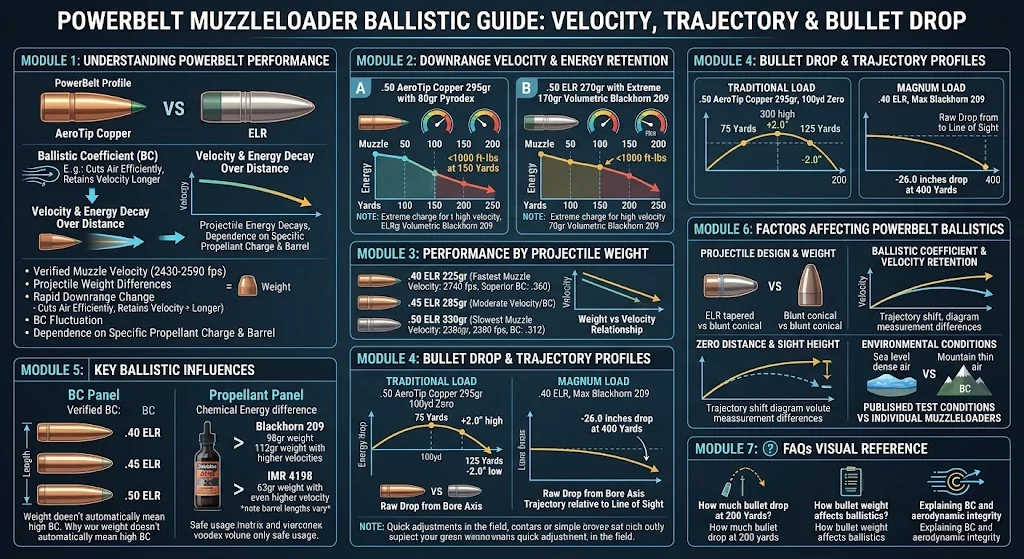
- Speed and kinetic energy diminish quickly as yardage increases. The 295 grain .50 caliber AeroTip Copper holds roughly 1100 ft-lbs at 100 yards but falls below the 1000 ft-lbs threshold before reaching 150 yards.
- Aerodynamic ratings differ drastically among the featured projectiles. The 285 grain .45 caliber ELR carries a proven .333 BC, while older conical profiles yield much lower efficiency scores.
- All listed metrics rely entirely on the exact powder type, charge volume, and rifle setup. Achieving 2590 fps with the 270 grain ELR demands a massive 170 grain volumetric load of Blackhorn 209.
PowerBelt Ballistics by Bullet Weight
| PowerBelt Bullet Model | Caliber | Bullet Weight | Projectile Design | Published Muzzle Velocity | Published Muzzle Energy | Ballistic Coefficient | Test Conditions |
| ELR | .40 Cal | 225 gr | AeroTip | 2740 fps | Not verified | .360 | CVA Paramount, Max Blackhorn 209 |
| ELR | .45 Cal | 285 gr | AeroTip | 2560 fps | Not verified | .333 | CVA Paramount, Max Blackhorn 209 |
| ELR | .50 Cal | 330 gr | AeroTip | 2380 fps | Not verified | .312 | CVA Paramount, Max Blackhorn 209 |
Evaluating Performance Across Bullet Weights
- Initial speed decreases significantly as projectile mass increases. The light 225 grain .40 caliber option leaves the muzzle at 2740 fps, whereas the heavier 330 grain .50 caliber bullet only reaches 2380 fps using identical maximum powder charges.
- Kinetic output fluctuates based on the shifting balance of mass and velocity, although factory energy charts are not officially published for these specific setups.
- Flight efficiency scales with projectile length and weight. The highly specialized .40 caliber 225 grain bullet secures an outstanding .360 BC thanks to its aggressive aerodynamic taper.
PowerBelt Bullet Drop Chart
| Distance | Bullet Drop or Trajectory | Remaining Velocity | Remaining Energy | PowerBelt Bullet and Weight | Zero Distance and Test Assumptions |
| 50 Yards | Modeled estimate: +2.0 inches | Not verified | Not verified | PowerBelt AeroTip Copper 295 gr | 100 Yard Zero, 80 gr Pyrodex |
| 100 Yards | 0.0 inches (Zero) | Not verified | Not verified | PowerBelt AeroTip Copper 295 gr | 100 Yard Zero, 80 gr Pyrodex |
| 125 Yards | Modeled estimate: -2.0 inches | Not verified | Not verified | PowerBelt AeroTip Copper 295 gr | 100 Yard Zero, 80 gr Pyrodex |
| 400 Yards | -26.0 inches | Not verified | Not verified | PowerBelt ELR .40 Cal | Modeled estimate: Zero distance not verified, Max Blackhorn 209 |
Reviewing the Bullet Drop Metrics
- Practical trajectory measurements reveal that a standard 295 grain PowerBelt propelled by 80 grains of Pyrodex will strike about two inches low at 125 yards assuming a 100 yard zero.
- When driven by a heavy load of Blackhorn 209, the streamlined .40 caliber ELR bullet maintains a remarkably flat flight path, showing merely 26 inches of drop at the 400 yard mark.
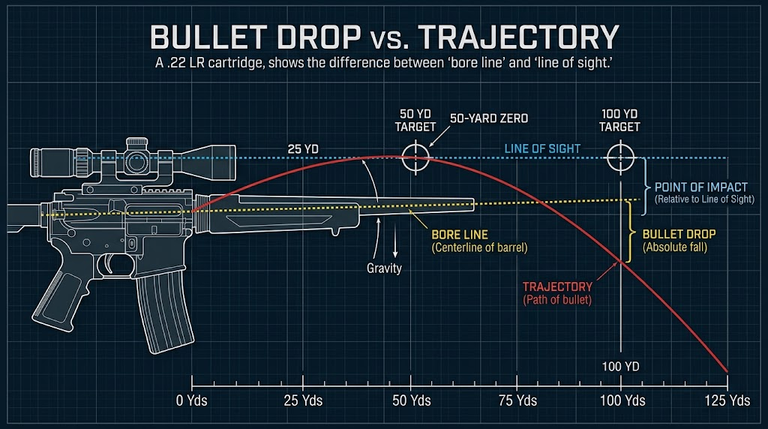
- Manufacturers typically report trajectory based on the optical line of sight instead of raw drop from the barrel axis, which helps shooters apply realistic holdovers in the field.
PowerBelt Trajectory Chart by Zero Distance
| PowerBelt Bullet | Bullet Weight | Propellant and Charge | Zero Distance | Distance | Published Trajectory or Sight Reference |
| AeroTip Copper | 295 gr | 80 gr Pyrodex | 100 Yards | 75 Yards | Modeled estimate: +2.0 inches |
| AeroTip Copper | 295 gr | 80 gr Pyrodex | 100 Yards | 100 Yards | 0.0 inches (Dead on) |
| AeroTip Copper | 295 gr | 80 gr Pyrodex | 100 Yards | 125 Yards | Modeled estimate: -2.0 inches |
The Effect of Zero Distance on Trajectory
- Implementing a 100 yard zero requires the bullet to arc approximately two inches above the crosshairs at 75 yards when utilizing an 80 grain Pyrodex load.
- Moving the zero distance inherently changes the highest point of the bullet’s flight, which dictates the maximum point blank range for hunting applications.
- The published trajectory data highlights that standard inline velocities bleed off rapidly, causing steep downward curves once the projectile passes 125 yards.
PowerBelt Ballistics by Propellant
| Propellant | PowerBelt Bullet | Bullet Weight | Published Charge | Barrel Length | Muzzle Velocity | Published Energy | Source Chart Conditions |
| Blackhorn 209 | ELR .45 Cal | 285 gr | 98 gr by weight | Not verified | 2293 fps | Not verified | CVA Endura Manual |
| Blackhorn 209 | ELR .45 Cal | 285 gr | 112 gr by weight | Not verified | 2430 fps | Not verified | CVA Endura Manual |
| IMR 4198 | ELR .45 Cal | 285 gr | 63 gr by weight | Not verified | 2530 fps | Not verified | CVA Endura Manual |
| Pyrodex | AeroTip Copper | 295 gr | 100 gr by volume | 26 inches | Not verified | Not verified | Published test data |
Assessing Propellant Influence on Ballistics
- Factory tests confirm that measuring 112 grains of Blackhorn 209 by weight accelerates a 285 grain ELR bullet to an impressive 2430 fps.
- Powder charges cannot be swapped casually. Weighing 112 grains of Blackhorn 209 on a scale represents a completely different loading method than pouring 100 grains of Pyrodex into a volumetric flask.
- Cross referencing these powders presents some limitations because the barrel length for the Blackhorn 209 tests remains unlisted, whereas the Pyrodex figures specify a 26 inch barrel.
PowerBelt Ballistic Coefficient Chart
| PowerBelt Bullet Model | Caliber | Bullet Weight | Projectile Design | Published Ballistic Coefficient | Source Notes |
| ELR | .40 Cal | 225 gr | AeroTip | .360 | BPI Outdoors verified data |
| ELR | .45 Cal | 285 gr | AeroTip | .333 | BPI Outdoors verified data |
| ELR | .50 Cal | 330 gr | AeroTip | .312 | BPI Outdoors verified data |
| AeroTip Copper | .50 Cal | 295 gr | AeroTip | Modeled estimate: 0.150 to 0.200 | Atlas Ballistics generalized data |
Ballistic Coefficient and Downrange Efficiency
- Aerodynamic performance changes heavily depending on the projectile family, highlighted by the slender .40 caliber ELR bullet posting a top tier .360 BC.
- Heavier mass does not automatically equal a better BC. The heavy 330 grain .50 caliber bullet possesses a .312 BC, falling short of the lighter .45 caliber alternative.
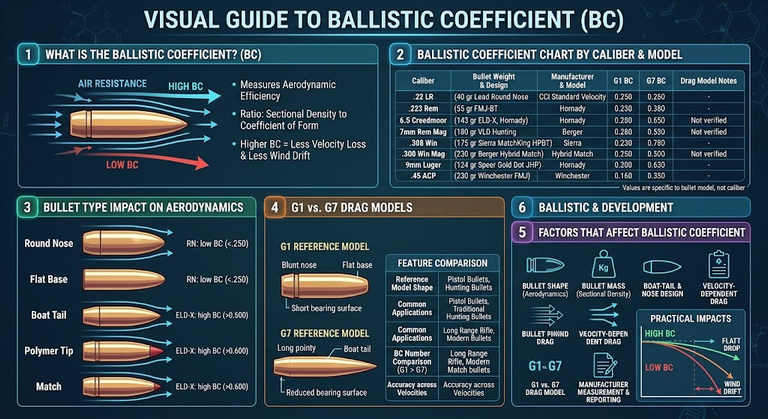
- A superior ballistic coefficient enables a bullet to slice through the air with less resistance, resulting in enhanced velocity retention and tighter vertical grouping at long distances.
Factors That Affect PowerBelt Ballistics
PowerBelt projectile design and weight dictate the foundational ballistics of any load. The radically sleek shape of the newer ELR line overcomes air resistance far better than traditional blunt nosed bullets. Choosing a heavier option like the 330 grain model delivers massive kinetic energy on target but forces the shooter to accept a slower initial velocity than they would get from a 225 grain bullet.
Propellant type and published charge act as the driving force behind the numbers on a ballistic chart. Utilizing black powder substitutes such as Blackhorn 209 measured by weight rather than volume completely changes barrel pressure and speed. Hunters are required to adhere to their powder manufacturer’s specific loading guidelines to safely reach the velocities advertised.
Barrel length and muzzle velocity are directly linked in the world of black powder firearms. A 26 inch barrel gives the expanding gases more space to push the projectile, resulting in higher speeds at the muzzle. Shooting a rifle with a shorter barrel guarantees that the actual velocity will fall short of the numbers published in factory test charts.
Ballistic coefficient and velocity retention determine the long range viability of a muzzleloader setup. The polymer tips and streamlined profiles found on ELR projectiles boost the ballistic coefficient, significantly minimizing in flight drag. This level of aerodynamic efficiency keeps the bullet flying supersonic for greater distances, which flattens the trajectory and preserves lethal terminal energy.
Zero distance and sight height establish how the bullet’s physical path aligns with the optics. Setting a 100 yard zero angles the barrel slightly upward to fight gravity over that specific distance. Changing the height of the scope mounts or opting for a different zero yardage will completely rewrite the holdover values necessary to hit targets at 150 or 200 yards.
Environmental conditions including humidity, temperature, and elevation constantly alter projectile behavior. Thick air at sea level slows a bullet down much faster than the thin atmosphere found in mountainous hunting units, effectively degrading the projectile’s real world BC. Because of these weather variables, factory charts serve as baselines rather than absolute guarantees.
Differences between published test conditions and individual muzzleloaders represent a critical variable for any shooter. Ammunition brands often record their data using controlled laboratory setups and maximum powder limits to showcase the best possible numbers. A hunter firing a standard rifle with a moderate hunting charge will see more severe bullet drop and lower speeds than the factory charts indicate.
Frequently Asked Questions
What is a PowerBelt ballistic chart?
A PowerBelt ballistic chart is a reference table that documents the expected speed, kinetic energy, and flight path of a designated muzzleloader projectile at specific yardages.
Where can you find official PowerBelt ballistic charts?
You can locate authentic ballistic charts through BPI Outdoors, the manufacturer of PowerBelt Bullets, or inside the official owner’s manuals provided with CVA inline rifles.
How much does a PowerBelt bullet drop at 100 yards?
If a rifle firing a 295 grain PowerBelt AeroTip Copper with 80 grains of Pyrodex is perfectly zeroed for 100 yards, the bullet drop at that exact distance will be zero inches.
How much does a PowerBelt bullet drop at 200 yards?
At 200 yards, a standard 295 grain PowerBelt will experience significant drop. In contrast, an optimized .40 caliber ELR bullet propelled by a maximum dose of Blackhorn 209 only drops 26 inches at 400 yards, making its 200 yard drop incredibly minimal. The exact measurement relies completely on the chosen powder charge and sight in distance.
What is the muzzle velocity of a .50-caliber PowerBelt bullet?
A .50 caliber 270 grain PowerBelt ELR projectile reaches an advertised muzzle velocity of 2590 fps when loaded over a 170 grain volumetric measure of Blackhorn 209.
How does PowerBelt bullet weight affect ballistics?
Increased bullet weight results in slower initial speeds but greater downrange momentum. A .40 caliber 225 grain ELR leaves the barrel at 2740 fps, while the bulkier .50 caliber 330 grain variant tops out at 2380 fps under comparable maximum propellant loads.
What is the difference between PowerBelt AeroTip and hollow-point bullets?
The AeroTip features a polymer insert that maintains an aerodynamic shape during flight and promotes deep penetration, whereas the traditional hollow point is designed for rapid expansion and immediate energy dumping upon impact.
How does propellant affect PowerBelt ballistic performance?
Various black powder substitutes burn at different rates and generate unique pressure curves. Blackhorn 209 typically delivers higher speeds per volume than standard Pyrodex, which dramatically reshapes the bullet’s downrange trajectory.
What is the ballistic coefficient of a PowerBelt bullet?
The BC is determined by the specific projectile configuration. A .45 caliber 285 grain PowerBelt ELR carries a confirmed .333 BC, and the streamlined .40 caliber 225 grain model achieves a highly efficient .360 BC.
Why do PowerBelt trajectory charts use different zero distances?
Manufacturers provide charts with multiple zero distances because a 50 yard zero is ideal for hunting in dense woods, while a 100 yard or 150 yard zero is necessary to take advantage of the flatter trajectories produced by magnum powder charges in open country.