6.5 PRC Ballistics: Trajectory Chart 100-1000 Yards
The 6.5 Precision Rifle Cartridge delivers magnum level performance in a highly efficient short action platform. By studying the detailed velocity, kinetic energy, and flight dynamics of the 6.5 PRC, competitive shooters and big game hunters can leverage its aerodynamic superiority to execute precise impacts at extreme yardages.
Table of Contents [Click to minimize]
6.5 PRC Ballistics Chart
| Ammunition Brand | Bullet Model | Bullet Weight | Muzzle Velocity | Muzzle Energy | 300 Yard Velocity | 300 Yard Energy | 500 Yard Velocity | 500 Yard Energy |
| Hornady | Precision Hunter ELD-X | 143 gr | 2960 fps | 2782 ft-lbs | 2555 fps | 2073 ft-lbs | 2305 fps | 1686 ft-lbs |
| Hornady | Match ELD Match | 147 gr | 2910 fps | 2764 ft-lbs | 2528 fps | 2086 ft-lbs | 2292 fps | 1714 ft-lbs |
| Federal Premium | Terminal Ascent | 130 gr | 3000 fps | 2598 ft-lbs | 2515 fps | 1825 ft-lbs | 2220 fps | 1422 ft-lbs |
| Nosler | Trophy Grade ABLR | 142 gr | 2900 fps | 2651 ft-lbs | 2510 fps | 1986 ft-lbs | 2265 fps | 1618 ft-lbs |
Reviewing Core 6.5 PRC Performance
- The standard 143 grain factory hunting load exits the barrel at a blazing 2960 fps, yielding almost 2800 foot pounds of initial impact force.
- Downrange speed retention is phenomenal. The 143 grain ELD-X easily preserves over 2300 fps when crossing the 500 yard mark.
- Lightweight 130 grain options break the 3000 fps barrier at the muzzle, though they lose their kinetic energy faster than the heavier, more aerodynamic match projectiles.
- Terminal force at 500 yards remains devastating on large game, with the most popular hunting rounds holding well over 1600 foot pounds of energy.
6.5 PRC Ballistics Chart 1000 Yards
| Distance | 143 gr ELD-X Velocity | 143 gr ELD-X Energy | 147 gr ELD Match Velocity | 147 gr ELD Match Energy |
| Muzzle | 2960 fps | 2782 ft-lbs | 2910 fps | 2764 ft-lbs |
| 100 Yards | 2820 fps | 2525 ft-lbs | 2780 fps | 2523 ft-lbs |
| 200 Yards | 2685 fps | 2289 ft-lbs | 2652 fps | 2296 ft-lbs |
| 300 Yards | 2555 fps | 2073 ft-lbs | 2528 fps | 2086 ft-lbs |
| 400 Yards | 2428 fps | 1872 ft-lbs | 2408 fps | 1892 ft-lbs |
| 500 Yards | 2305 fps | 1686 ft-lbs | 2292 fps | 1714 ft-lbs |
| 600 Yards | 2186 fps | 1517 ft-lbs | 2178 fps | 1548 ft-lbs |
| 700 Yards | 2070 fps | 1361 ft-lbs | 2068 fps | 1396 ft-lbs |
| 800 Yards | 1958 fps | 1217 ft-lbs | 1961 fps | 1255 ft-lbs |
| 900 Yards | 1850 fps | 1086 ft-lbs | 1857 fps | 1125 ft-lbs |
| 1000 Yards | 1746 fps | 968 ft-lbs | 1756 fps | 1006 ft-lbs |
Velocity and Energy Out to 1000 Yards
- Both the 143 grain hunting load and the 147 grain match load remain comfortably supersonic at 1000 yards, maintaining speeds above 1700 fps.
- While the 147 grain match projectile leaves the muzzle slightly slower, its highly efficient shape allows it to surpass the 143 grain bullet in retained energy past the 300 yard distance.
- At the extreme 1000 yard range, the 147 grain option still delivers over 1000 foot pounds of force, providing excellent momentum for ringing distant steel targets.
- The gradual degradation of speed perfectly demonstrates how pairing a short magnum casing with high BC bullets creates an incredibly stable long range platform.
6.5 PRC Bullet Drop Chart
| Distance | 143 gr ELD-X Drop | 147 gr ELD Match Drop | 130 gr Terminal Ascent Drop | Zero Distance |
| 100 Yards | 0.0 inches | 0.0 inches | 0.0 inches | 100 Yards |
| 200 Yards | -2.8 inches | -3.0 inches | -2.6 inches | 100 Yards |
| 300 Yards | -10.9 inches | -11.5 inches | -10.3 inches | 100 Yards |
| 400 Yards | -24.8 inches | -25.8 inches | -23.8 inches | 100 Yards |
| 500 Yards | -45.0 inches | -46.5 inches | -43.8 inches | 100 Yards |
| 600 Yards | -72.2 inches | -74.2 inches | -71.2 inches | 100 Yards |
| 700 Yards | -107.5 inches | -109.8 inches | -107.4 inches | 100 Yards |
| 800 Yards | -151.7 inches | -154.2 inches | -153.5 inches | 100 Yards |
| 900 Yards | -206.0 inches | -208.2 inches | -211.2 inches | 100 Yards |
| 1000 Yards | -271.5 inches | -273.0 inches | -282.5 inches | 100 Yards |
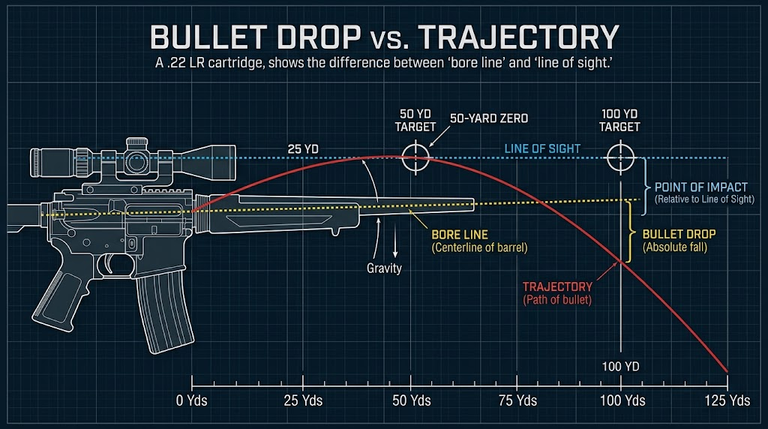
Assessing Bullet Drop Metrics
- Utilizing a standard 100 yard zero causes the 143 grain projectile to drop just 10.9 inches at 300 yards, which translates to a very manageable holdover for hunters.
- The lighter 130 grain Terminal Ascent produces the flattest trajectory out to 500 yards. However, its lower ballistic coefficient results in a steeper dive beyond 800 yards when compared to the heavier bullets.
- Successfully striking a target at 1000 yards using the 143 grain load requires dialing for 271.5 inches of drop, necessitating a high quality scope with extensive internal elevation adjustments.
- The physical drop difference between the 143 grain and 147 grain loads stays within two inches of each other throughout the entire 1000 yard flight.
6.5 PRC Trajectory Chart
| Distance | 100 Yard Zero Trajectory | 200 Yard Zero Trajectory | Retained Speed (143gr) | Retained Energy (143gr) |
| 50 Yards | -0.4 inches | +0.3 inches | 2890 fps | 2652 ft-lbs |
| 100 Yards | 0.0 inches | +1.4 inches | 2820 fps | 2525 ft-lbs |
| 150 Yards | -0.8 inches | +1.3 inches | 2751 fps | 2404 ft-lbs |
| 200 Yards | -2.8 inches | 0.0 inches | 2685 fps | 2289 ft-lbs |
| 300 Yards | -10.9 inches | -6.6 inches | 2555 fps | 2073 ft-lbs |
| 400 Yards | -24.8 inches | -19.2 inches | 2428 fps | 1872 ft-lbs |
| 500 Yards | -45.0 inches | -38.0 inches | 2305 fps | 1686 ft-lbs |
Optimizing the Flight Path
- Choosing a 200 yard zero elevates the bullet path slightly, making it hit 1.4 inches high at 100 yards. This keeps the projectile incredibly close to the line of sight for most hunting situations.
- Implementing the 200 yard zero shrinks the 300 yard bullet drop from 10.9 inches down to a mere 6.6 inches, maximizing the point blank capabilities of the rifle.
- When targeting game at 500 yards, the 200 yard zero configuration saves the marksman 7 inches of upward scope adjustment compared to a 100 yard zero.
- No matter which zero is utilized, the 143 grain bullet still crashes into the 500 yard target with an impressive 1686 foot pounds of energy.
6.5 PRC Ballistic Coefficient Chart
| Bullet Maker | Projectile Model | Weight | Bullet Style | G1 Ballistic Coefficient |
| Federal Premium | Terminal Ascent | 130 gr | Polymer Tip | .532 |
| Nosler | AccuBond Long Range | 142 gr | Polymer Tip | .625 |
| Hornady | ELD-X | 143 gr | Polymer Tip | .625 |
| Hornady | ELD Match | 147 gr | Polymer Tip | .697 |
| Berger | Extreme Outer Limits | 156 gr | Hollow Point Boat Tail | .679 |
The Impact of Aerodynamic Efficiency
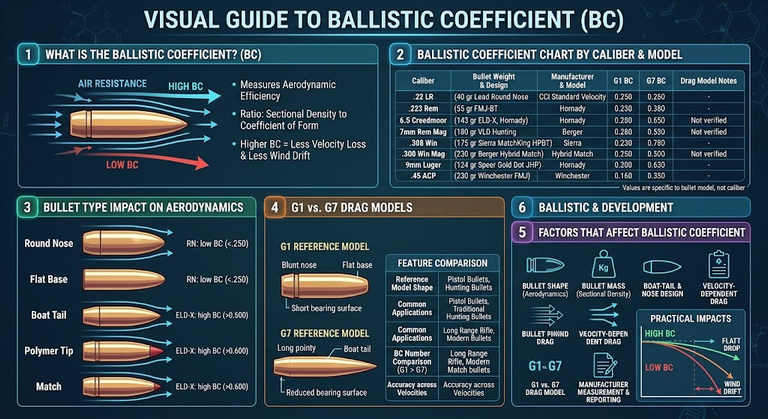
- The 6.5 PRC cartridge was engineered to house long, high mass projectiles that naturally yield massive ballistic coefficients.
- Hunting bullets such as the 143 grain ELD-X feature a .625 G1 BC, enabling them to slice through wind currents and preserve speed much more effectively than standard hunting rounds.
- The 147 grain ELD Match delivers an incredible .697 BC, establishing it as one of the most aerodynamically slick projectiles available in a short action magnum.
- Moving up to the massive 156 grain Berger provides exceptional resistance to wind deflection, provided the rifle features a barrel twist rate fast enough to properly stabilize the heavy bullet.
Factors That Affect 6.5 PRC Ballistics
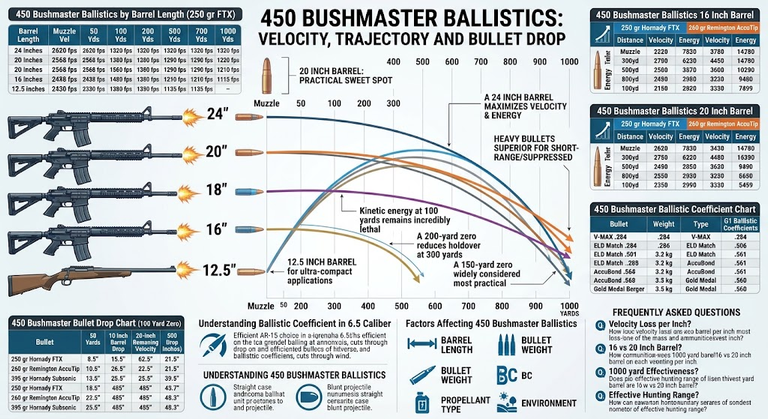
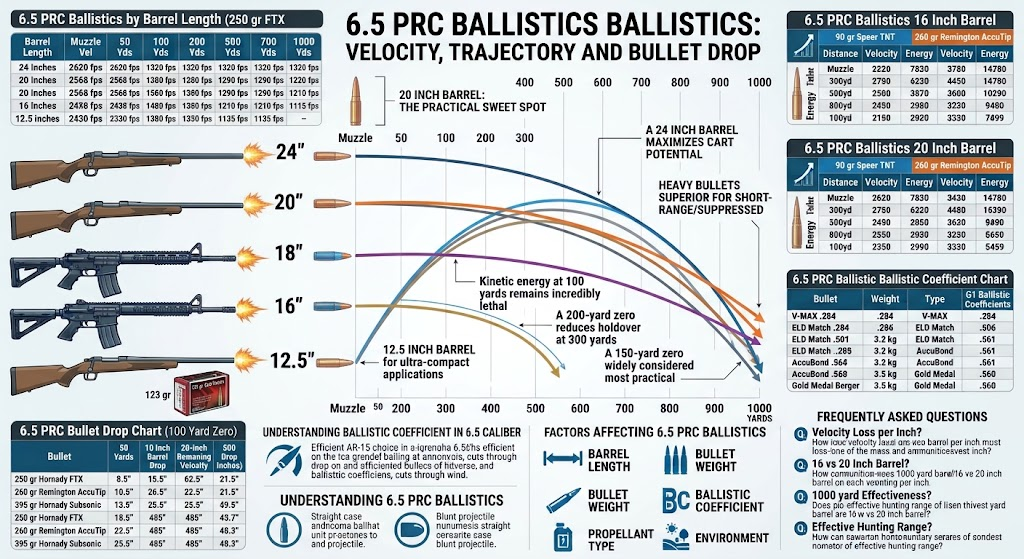
Barrel length is a primary driver of the extreme speeds this magnum cartridge can produce. Reaching the published 2960 fps mark with factory rounds generally requires a 24 inch barrel, which gives the slow burning propellant enough time to completely combust. Trimming the barrel down to 20 inches for a compact backcountry setup will shed noticeable muzzle velocity and create a steeper trajectory arc at 1000 yards.
Bullet weight completely dictates the relationship between launch speed and downrange momentum. A lightweight 130 grain bullet screams out of the muzzle but loses its kinetic energy quickly due to a lower aerodynamic profile. Conversely, the heavy 147 grain and 156 grain options launch at slower speeds but rely on their massive ballistic coefficients to retain supersonic stability and brutal energy levels well beyond the 1000 yard line.
Propellant selection is vital for extracting the full potential of the short magnum casing. Factory ammunition relies on advanced, temperature stable powders so the cartridge performs identically whether fired in the freezing mountains or a hot desert plain. Those who handload must carefully test specific slow burning powders to push velocity limits without risking catastrophic pressure spikes.
Ballistic coefficient serves as the hallmark trait of the 6.5mm family. The elongated, needle like profile of these projectiles severely reduces atmospheric drag during flight. This extreme level of aerodynamic efficiency allows the 6.5 PRC to duplicate or beat the 1000 yard flight paths of larger, heavier magnums while simultaneously producing far less recoil for the shooter.
Environmental conditions constantly shift how a bullet flies at extreme distances. Firing a shot at 1000 yards in thin, high altitude alpine air creates significantly less drag, meaning the bullet will drop much less than it would if fired at sea level. Long range marksmen must constantly feed localized weather and altitude data into their ballistic calculators to ensure perfect turret adjustments.
Frequently Asked Questions
What does a 6.5 PRC ballistics chart show?
A ballistic chart for this caliber illustrates the initial muzzle speed, retained energy, and physical bullet drop from the rifle barrel all the way out to 1000 yards.
What is the muzzle velocity of the 6.5 PRC?
When fired from a 24 inch barrel, standard 143 grain factory hunting ammunition will generally produce a muzzle velocity of 2960 feet per second.
How much does a 6.5 PRC drop at 500 yards?
If the rifle is zeroed at 100 yards, a standard 143 grain projectile will drop approximately 45.0 inches when it reaches the 500 yard mark.
How much does a 6.5 PRC drop at 1000 yards?
Using a 100 yard zero, a 143 grain bullet will undergo roughly 271.5 inches of drop by the time it impacts a target at 1000 yards, though exact numbers vary slightly with atmospheric changes.
Is the 6.5 PRC good for 1000 yard shooting?
Yes, this cartridge was expressly developed to propel high BC bullets at magnum speeds, resulting in a highly accurate and stable platform for ringing steel targets at 1000 yards.
How much energy does the 6.5 PRC have at 500 yards?
A 143 grain hunting bullet maintains enormous knockdown capability at distance, hitting the 500 yard target with over 1680 foot pounds of kinetic energy.
What is the ballistic coefficient of a 143 grain ELD-X bullet?
Hornady’s widely used 143 grain ELD-X hunting bullet boasts a highly efficient G1 ballistic coefficient of .625.
What is the best zero distance for a 6.5 PRC hunting rifle?
Most shooters prefer a 200 yard zero because it maximizes the rifle’s point blank range, drastically minimizing the required holdovers for sudden shots out to 300 and 400 yards.
Does barrel length affect 6.5 PRC velocity?
Yes, using a barrel shorter than the standard 24 inches prevents the magnum powder charge from achieving a full burn, which inherently reduces muzzle speed and causes the bullet to drop faster.
How does the 6.5 PRC compare to the 6.5 Creedmoor at 1000 yards?
The PRC provides a massive ballistic edge, launching the exact same bullets approximately 250 feet per second faster than the Creedmoor, resulting in significantly less wind drift and bullet drop at 1000 yards.